Discover Florence with the free GuideXpress audio guide and explore the city’s most iconic landmarks on foot, from the Cathedral of Santa Maria del Fiore and Brunelleschi’s Dome to Giotto’s Bell Tower, the Uffizi Gallery, Piazza della Signoria, Palazzo Vecchio and Ponte Vecchio.
With the Florence audio guide app, you can listen to stories, curiosities and in-depth insights as you explore the city independently, choosing between geolocated audio guides and themed tours focused on art, the Renaissance and the history of Florence.


Florence is one of the best cities in Italy to explore on foot. Many of its most important landmarks are concentrated in the historic centre, where Renaissance squares, churches, palaces, museums and views over the Arno are all within easy walking distance.
With the GuideXpress Florence audio guide, you can explore the city independently and learn more about the places you visit as you discover them. The app lets you move freely around Florence using geolocated audio guides, or choose from themed tours and follow a ready-made itinerary.
It is a true digital Florence travel guide, designed to help you discover both famous landmarks and lesser-known places while giving you the freedom to choose your own pace, stops and route.
One of the first places to see in Florence is Piazza del Duomo, home to the Cathedral of Santa Maria del Fiore, Brunelleschi’s Dome, Giotto’s Bell Tower and the Baptistery of St John.
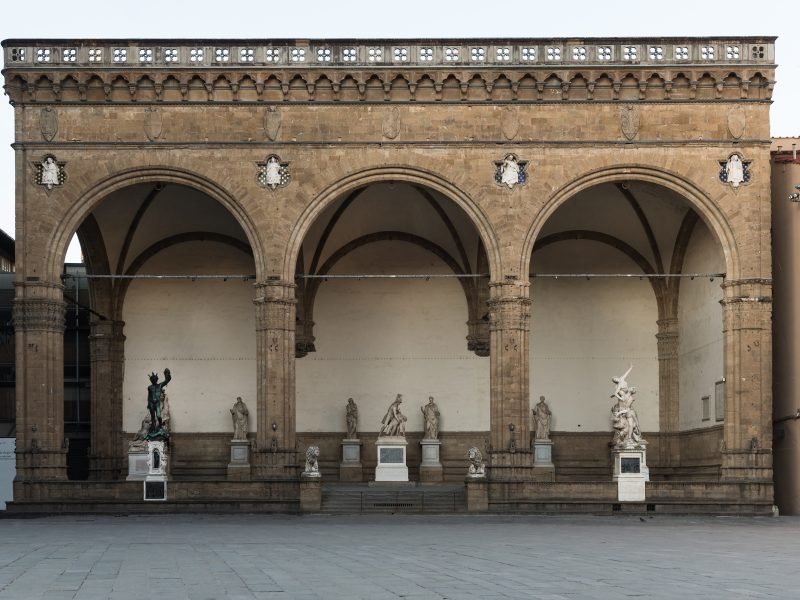
From here, continue towards Piazza della Signoria, one of Florence’s most iconic squares, where you will find Palazzo Vecchio and the Loggia dei Lanzi. Just a short walk away is the Uffizi Gallery, while heading towards the Arno brings you to Ponte Vecchio, one of the city’s most recognisable landmarks.
Other top Florence attractions include the Basilica of Santa Croce, Santa Maria Novella, the Basilica of San Lorenzo, the Medici Chapels, Palazzo Medici Riccardi, Pitti Palace and the Boboli Gardens.
The audio guide helps connect these places, giving you a better understanding of their history, the people behind them and the role they played in shaping Florence.
Exploring Florence on foot is one of the best ways to understand how closely art, politics and everyday life are woven into the historic centre.
A classic walking route can start at the Cathedral of Santa Maria del Fiore and Piazza del Duomo before continuing towards Piazza della Signoria. Here, Palazzo Vecchio reflects centuries of Florentine political history, while the nearby Loggia dei Lanzi turns the square into an open-air sculpture gallery.
From Piazza della Signoria, it takes only a few minutes to reach the Uffizi Gallery and the banks of the Arno. Continue a little further and you will arrive at Ponte Vecchio, famous for its historic shops and unmistakable silhouette over the river.
Following this route with an audio guide turns a simple walk through Florence into a journey of discovery, allowing you to learn more about each place without having to follow the fixed pace of a traditional guided tour.
Florence is inseparable from the Renaissance and from the history of the Medici family. As you explore the city, you constantly encounter palaces, churches and works of art linked to the dynasty that helped transform Florence into one of Europe’s leading artistic and cultural centres.
One of the most significant places is Palazzo Medici Riccardi, one of the residences most closely associated with the rise of the Medici family. Nearby are the Basilica of San Lorenzo and the Medici Chapels, both deeply connected with the history of the dynasty.
Across the Arno, Pitti Palace became another major Medici residence, together with the neighbouring Boboli Gardens. The Vasari Corridor is another fascinating reminder of the connections between the different centres of power in Renaissance Florence.
The Florence audio guide helps you see these places not as isolated monuments, but as parts of a wider story involving powerful families, artists, architects and the transformation of the city itself.
A Florence itinerary does not have to focus only on the city’s most famous landmarks. Cross Ponte Vecchio and you enter the Oltrarno, an area filled with historic buildings, gardens, churches and panoramic viewpoints.
Beyond Pitti Palace and the Boboli Gardens, you can discover the Bardini Garden, the Rose Garden, Torre San Niccolò and the Basilica of San Miniato al Monte, which offers one of the most beautiful views over Florence.
The historic centre also has plenty of less obvious places worth discovering, including Orsanmichele, Dante’s House, the Porcellino Market and Piazza della Repubblica.
These routes combine Florence’s major sights with less crowded stops and are ideal for travellers who want to create their own itinerary and explore the city with greater freedom.
With GuideXpress, you can choose how to explore Florence based on the way you like to travel.
In free exploration mode, you can walk around the city without following a fixed route, choose which attractions you want to visit and listen to the available audio guides as you go.
With Tour Mode, you can instead follow ready-made themed itineraries, with stops connected by a common theme such as art, history, the Renaissance or other aspects of Florence.
For many attractions, you can also choose between three narration styles: a kids version, with simpler and more engaging language; a classic version, designed for a complete but easy-to-follow visit; and an encyclopaedic version, ideal for travellers who want more detailed historical, artistic and cultural explanations.
This means you can choose not only which route to follow, but also how deeply you want to explore each place, adapting the experience to your own way of discovering Florence.





Yes. With GuideXpress, you can use a free Florence audio guide directly from the app and listen to content about the city’s main landmarks, squares, museums and attractions as you explore.
GuideXpress includes audio guides for many of Florence’s top attractions, including the Cathedral of Santa Maria del Fiore, Brunelleschi’s Dome, Giotto’s Bell Tower, the Uffizi Gallery, Piazza della Signoria, Palazzo Vecchio, Ponte Vecchio, Santa Croce and Pitti Palace.
A tour guide usually accompanies visitors in person, following a set route and schedule. A digital guide, such as GuideXpress, lets you explore Florence using your smartphone and decide for yourself what to see, when to stop and which places you want to learn more about. A traditional guide offers a personal guided experience, while a digital guide gives you greater flexibility and freedom.
You can explore Florence independently with an audio guide app such as GuideXpress. You can walk around the city freely and listen to audio guides for the places you discover, or choose one of the available themed tours and follow a ready-made itinerary.
Yes. For many attractions, GuideXpress offers three narration styles: a kids version, with simpler and more engaging language; a classic version, designed for a complete but easy-to-follow visit; and an encyclopaedic version, for travellers who want more detailed historical, artistic and cultural information.
Yes. Florence’s historic centre is particularly well suited to walking because many of its main attractions are located close to one another. With a geolocated audio guide, you can walk between the Duomo, Piazza della Signoria, the Uffizi Gallery, Ponte Vecchio and other landmarks while learning more about the places you encounter along the way.